
 +91-8700323862
 kbslocks@gmail.com
How to Make Your Door Locks Last 10+ Years: Simple Maintenance Tips Most People Ignore
We’ve all been there: you come home after a long day, put the key in the front door, and it sticks. You jiggle it, pull it back a millimeter, twist again, and finally, it turns. Most of us just ignore this minor annoyance until one morning the key snaps off in the lock or the handle stops latching altogether.
Here is the honest truth: most door locks don’t fail because they are cheap they fail because they are completely neglected. Over time, dust gets inside the keyway, factory grease dries out, and heavy doors begin to sag.
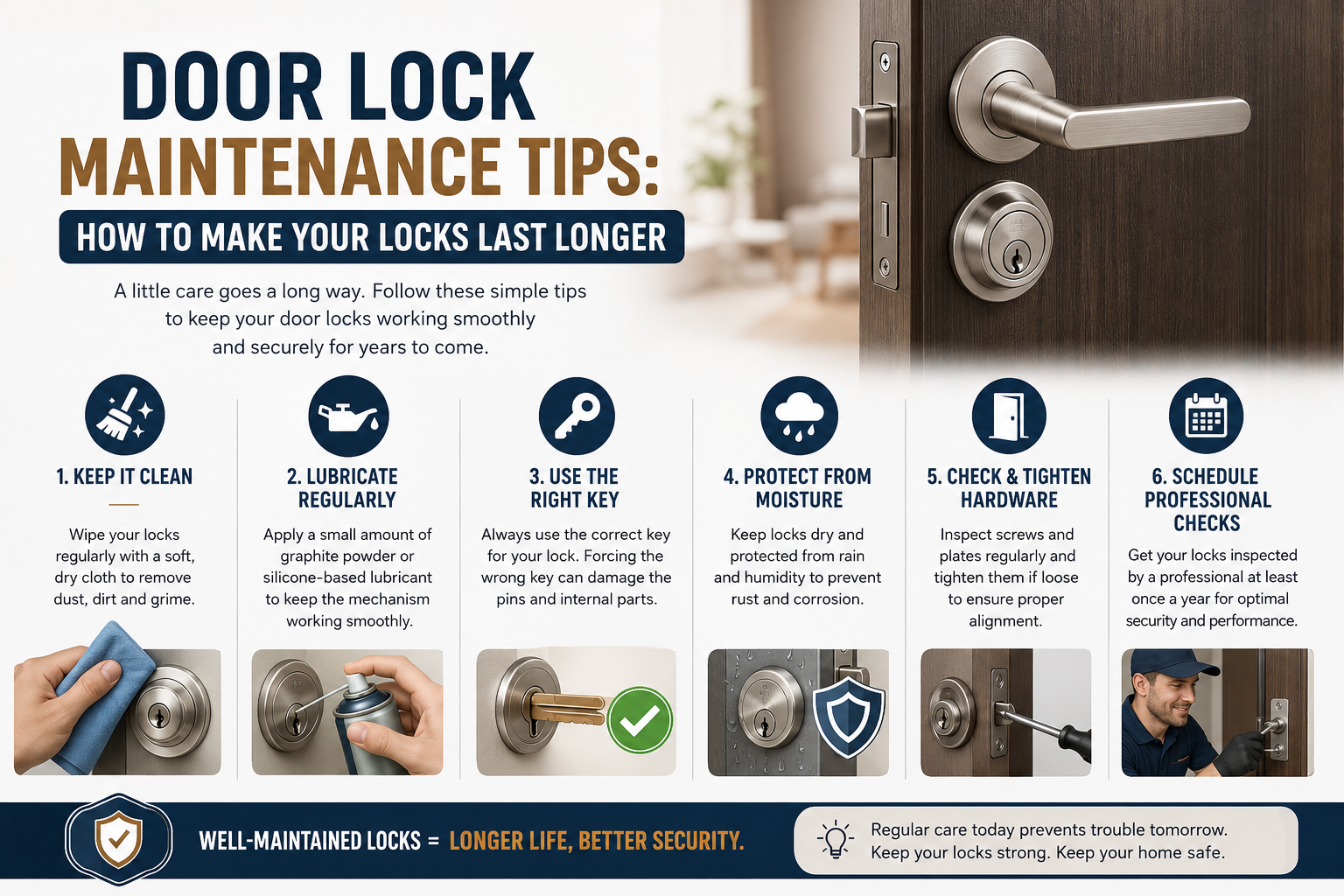
The good news? Proper door lock maintenance takes about 5 minutes, twice a year, and costs almost nothing. Here is how to keep your door locks working like brand new for years to come.
Stop Spraying WD-40 Into Your Locks (Do This Instead)
When a door lock starts sticking, the first instinct for 9 out of 10 homeowners is to grab a can of classic WD-40 and blast the keyhole.
Please, stop doing that.
Standard WD-40 is a solvent, not a long-term lubricant. Sure, it feels smooth for a day or two because it flushes out surface dirt. But as it dries, it leaves behind a thin, sticky film. Dust, lint from your pockets, and fine grit cling to that film like a magnet. Within a few months, that dust turns into a dark, gummy paste inside the cylinder—making the sticking problem far worse than before.
What to use instead:
-
Graphite Powder: This is dry, powdered carbon. Because it is completely dry, zero dust or dirt sticks to it. You puff a tiny amount into the keyway, slide your key in and out, and the internal pins glide smoothly.
Dry Silicone or PTFE Lock Spray: If you live in a humid or coastal area, a dedicated dry lock spray works even better. It repels moisture and prevents rust without leaving a wet, sticky residue.
Rule of thumb: Give your main front and back door locks a quick puff of dry lubricant every 6 months. Interior bedroom or office doors usually only need it once a year.
A Quick 5-Minute Routine to Clean and Maintain Your Locks
You don’t need to take the lock off the door or call a professional for basic upkeep. Just follow these four simple steps twice a year:
-
Clean the surface without ruining the finish: Wipe outer handles and escutcheon plates using a soft cloth dampened with warm water and a drop of mild soap. Avoid bleach or harsh bathroom cleaners—they strip protective brass, chrome, and matte black coatings.
-
Blow out hidden dust: Take a can of compressed air (the kind used for computer keyboards) and blow a quick burst straight into the keyway. You'll be surprised by how much dust and lint flies out.
-
Apply dry lubricant: Puff a small amount of dry graphite or spray a short burst of dry PTFE spray into the keyhole and along the side latch bolt.
-
Work the mechanism: Insert your key and turn it back and forth 10 to 12 times. Operate the handle up and down. This spreads the lubricant evenly across all internal pins, springs, and levers.
Is Your Door Misaligned? (The Silent Lock Killer)
Sometimes a sticking lock isn't a lock problem at all it’s a door problem.
Wooden doors expand during humid seasons, hinges wear down, and house frames settle. When a door sags even a fraction of an inch, the latch bolt no longer aligns cleanly with the hole in the strike plate on the frame.
If you have to push, lift, or shoulder-bump your door just to turn the key or throw the deadbolt, you are putting massive pressure on the lock cylinder every single day. Eventually, the internal pins will bend or the latch mechanism will snap.
The 10-Second Alignment Test
Open your door and turn the lock while it is swinging in mid-air. If the key turns smoothly when open, but struggles when closed, your lock is fine—your door is rubbing.
Quick Fix: Tighten the hinge screws on the door frame. If the top hinge is loose, replace one short screw with a 3-inch wood screw that reaches all the way into the wall framing. This pulls a sagging door back into alignment instantly.
3 Everyday Habits That Quietly Ruin Your Locks
-
Hanging heavy bags on door handles: Levers are designed for downward hand pressure, not for holding 10-pound backpacks or heavy groceries. Constant weight stretches internal springs, leaving you with a droopy, loose handle.
-
Using worn-out or bent keys: If a key is visibly bent or the teeth look worn smooth, stop using it. Forcing a bad key warps the delicate brass pins inside the cylinder.
-
Slamming the door: Every time a door slams, the latch bolt slams against the metal strike plate, loosening frame screws and knocking alignment out of place.
Frequently Asked Question
How often should I lubricate my door locks?
Main entrance doors exposed to rain and dust should be lubricated every 6 months. Interior room doors only need attention once every 12 to 18 months.
Can I use cooking oil or machine oil on a lock?
No. Cooking oil spoils and turns sticky over time, while heavy machine oil attracts dirt quickly. Always stick to dry graphite powder or dry lock sprays.
Why does my key turn hard only in winter?
Moisture trapped inside the keyway can freeze or cause internal components to contract. Blowing out moisture with compressed air and applying dry graphite prevents winter lock jamming.
Final Thoughts
Taking care of your door locks isn't complicated, but it pays off in long-term peace of mind. A few minutes of simple care keeps your keys turning effortlessly and keeps your property secure.
If you are upgrading older hardware or building a new home, explore KBS Locks for high-security mortise locks, durable door handles, and premium door accessories built to last.