
 +91-8700323862
 kbslocks@gmail.com
Choosing the right lock is not merely a hardware decision — it is an investment in the safety of your family, your property, and your peace of mind. With dozens of lock types available in India's growing security market, the decision can quickly become overwhelming. At KBS Locks and Hardware, we have spent over a decade helping homeowners, builders, and businesses make the smartest choices.
This guide walks you through the essential factors you should consider before purchasing any locking solution — from understanding your door type to evaluating material quality and certification standards.
A lock is only as strong as the door it is fitted on — but the right lock makes every door stronger.
1. Understand Your Door Type
The very first step is identifying your door material and construction. Different doors require different lock bodies. A thick, solid-core wooden door can support a robust mortise lock, while a hollow-core door may require a cylindrical lock. Metal and uPVC doors come with their own framing requirements.
- Solid Wood Doors — Best suited for mortise locks with full metal body construction
- Metal Doors — Require locks with compatible back-sets and anti-drill protection
- uPVC / UPVC Doors — Multi-point locking systems are recommended
- Glass Frame Doors — Floor bolts combined with patch fittings work best
2. Choose the Right Lock Category
India's lock market broadly offers four major categories. Understanding the difference helps you narrow down options quickly.
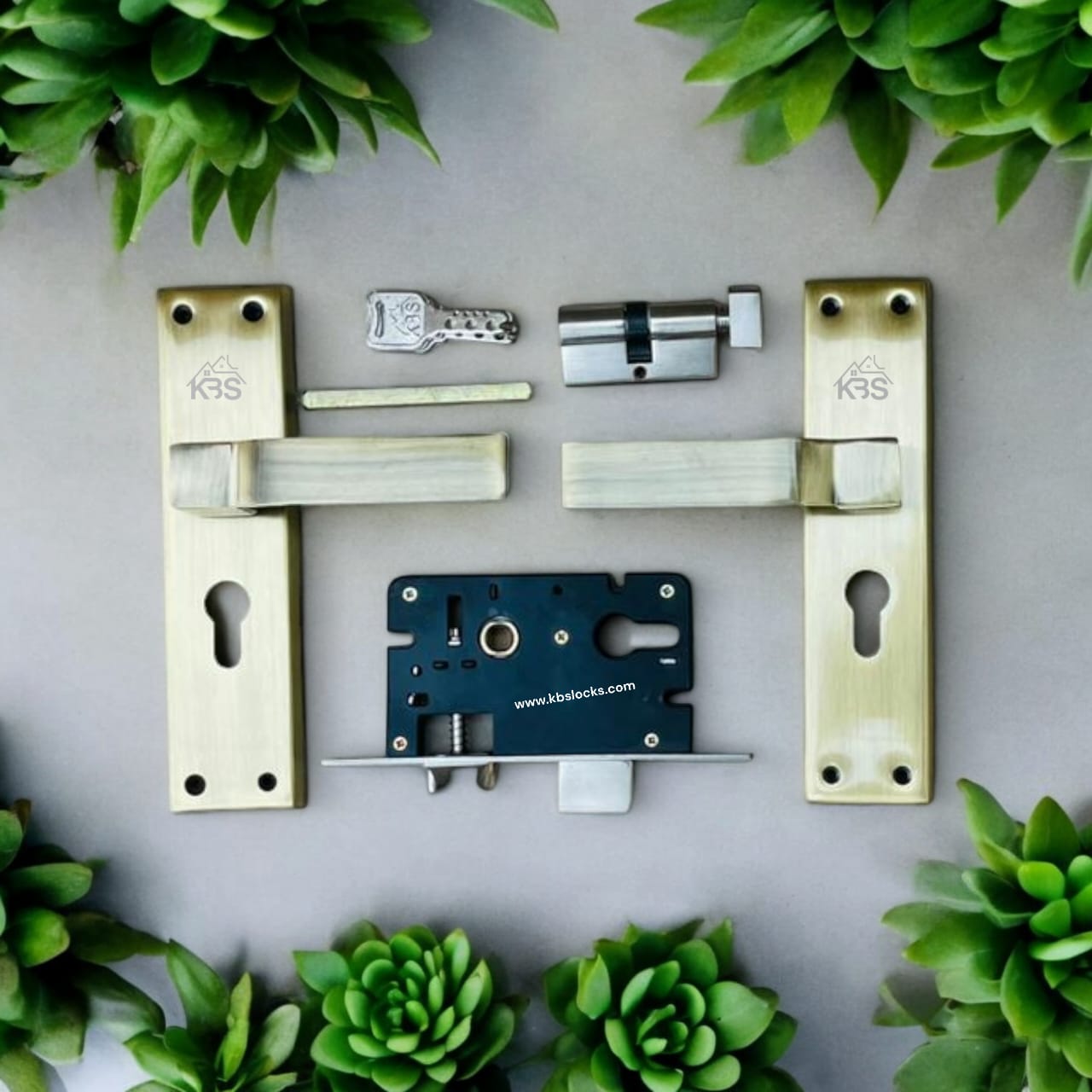
Mortise Locks
These are fitted inside a pocket (mortise) cut into the door. They offer superior strength and are the preferred choice for main entry doors in residential and commercial buildings. KBS mortise locks come in 6-lever and 8-lever configurations, providing excellent key-differentiation and pick resistance.
Door Knob / Handle Locks
Primarily used for interior doors such as bedrooms and bathrooms. They offer convenience rather than high security, and should not be used as the sole security layer on any exterior entrance.
Door Accessories
These include door closers, stoppers, hinges, handles, and tower bolts. Often overlooked, poor-quality accessories can compromise even the strongest lock installation.
Always combine a high-quality mortise lock with a reinforced door frame and proper hinges. The weakest point in any door security system is rarely the lock itself — it is usually the frame or the installation quality
Smart Locks
Digital locks with PIN, fingerprint, RFID, or Bluetooth access are increasingly popular in urban homes and offices. They offer convenience and audit trails but require a power source and regular maintenance.
3. Evaluate Material and Build Quality
Lock materials directly impact longevity, corrosion resistance, and overall security rating. Here's what to look for:
- Stainless Steel Body — Resists corrosion, ideal for coastal and humid climates
- Brass Components — Natural antimicrobial properties and excellent machinability
- Zinc Die-Cast — Economical option but less durable under sustained force
- Hardened Steel Bolts — Resist cutting and drilling attacks
At KBS Locks, all primary products use premium stainless steel and brass-grade components that are tested to withstand India's varied climate conditions — from humid coastal environments to dry northern regions like Aligarh.
Security is not a product — it is a system. Every element, from the lock to the frame to the installer, must work in harmony.