
 +91-8700323862
 kbslocks@gmail.com
When it comes to securing your space, the lock you choose for your bedroom door should be vastly different from the one guarding your office. While both provide a barrier, their primary functions—and the level of security they require—are fundamentally distinct.
Choosing the wrong lock isn't just an inconvenience; it can compromise privacy at home or expose sensitive information at work. This guide will walk you through the key differences and help you select the ideal hardware for both environments.
Understanding the Core Functions
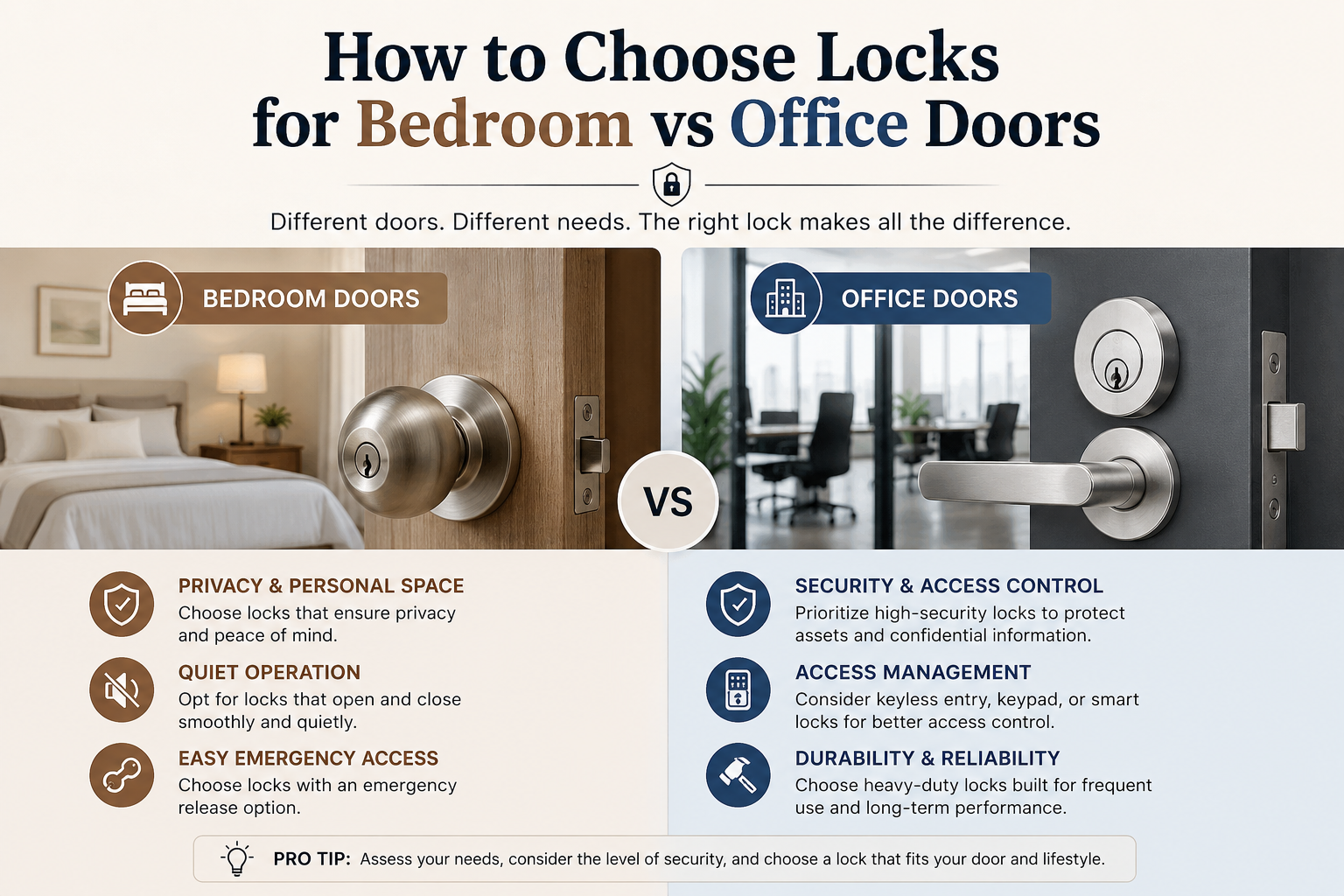
The image below illustrates the fundamental contrast. The primary goal of a bedroom lock is Privacy, whereas an office lock prioritizes Security and Controlled Access.
1. Bedroom Locks: Prioritizing Privacy
Your bedroom is your sanctuary. The lock's function is simple: to signal that the room is occupied and prevent accidental intrusion.
-
The Go-To Mechanism: Privacy locks typically use a thumb-turn or a simple push-button mechanism on the inside of the door. As seen in the left panel of our graphic (image_0.png), this allows for immediate locking without needing a key.
-
The Emergency Feature: An essential feature of residential privacy locks is the emergency override. Usually located on the exterior knob or lever, this allows the lock to be opened from the outside using a simple tool (like a generic privacy key, a hairpin, or a small screwdriver). This is crucial in case a child locks themselves in or there is a medical emergency.
-
Key Considerations:
-
Esthetics: Since security is low, focus on handles that match your home's decor (e.g., brushed nickel, matte black, vintage brass).
-
Ease of Use: Levers (like the brass one pictured) are often easier to operate than knobs, especially for children or the elderly.
-
2. Office Locks: Prioritizing Security & Access
An office, whether a dedicated home workspace or a commercial suite, often holds confidential documents, expensive equipment, or sensitive data. The requirements for this lock are much higher.
-
The Go-To Mechanism: Office doors rely on Keyed Entry locks. As highlighted in the right panel of the graphic (image_0.png), these locks require a specific physical key (or a code/fob in modern systems) to grant entry from the outside.
-
Security Grades: Unlike residential locks (often Grade 3), commercial or critical office locks should be Grade 1 or Grade 2 (ANSI/BHMA certified), indicating superior durability and resistance to picking, drilling, and physical force.
-
Key Considerations:
-
Controlled Access: You decide who has a key. This prevents unauthorized staff, clients, or cleaners from entering sensitive areas.
-
Durability: Commercial hardware is built to withstand high-traffic use.
-
Master Keying: In larger offices, these locks are often integrated into a master key system, where one master key opens all doors, but individual keys only open specific offices.
-
Feature Comparison Summary
To summarize the visual breakdown from the infographic, here is a quick reference guide:
| Feature | Bedroom (Privacy Lock) | Office (Keyed Entry Lock) |
|---|---|---|
| Primary Goal | Privacy (Keeping people out when occupied) | Security (Protecting assets and information) |
| Inside Operation | Thumb-turn or Push-button | Key cylinder or thumb-turn (depends on function) |
| Outside Operation | Emergency release (No key required) | Key required for entry |
| Hardware Grade | Residential Grade 3 (Typical) | Commercial Grade 1 or 2 (Recommended) |
| Typical Finish | Decorative, matches home decor | Functional, durable (Satin Chrome/Stainless) |
Final Recommendation
By understanding these distinctions, you can make an informed decision that enhances both the comfort of your home and the security of your professional environment. Always invest in quality hardware appropriate for the door’s function.