
 +91-8700323862
 kbslocks@gmail.com
यहाँ आपका कंटेंट सही और क्लीन Markdown Formatting के साथ तैयार है (कॉपी-पेस्ट के कारण खराब हुई हेडिंग्स, टेबल और बुलेट पॉइंट्स की फॉर्मेटिंग को पूरी तरह फिक्स कर दिया गया है):
3 Most Secure Types of Door Locks to Prevent Theft
You normally think of security cameras, motion sensors, or alarm systems when you think about home security. But the truth is simple: a powerful door is only as strong as the lock that holds it closed.
Burglars are after easy targets. A front door lock that looks flimsy or can be forced in less than 30 seconds is an open invitation to disaster. The best approach to prevent break-ins before they happen is to upgrade to a high-security lock body.
There are plenty of hardware solutions on the market. But what sorts of locks really provide optimal physical security? Here’s a rundown of the 3 most secure door lock types on the market today.
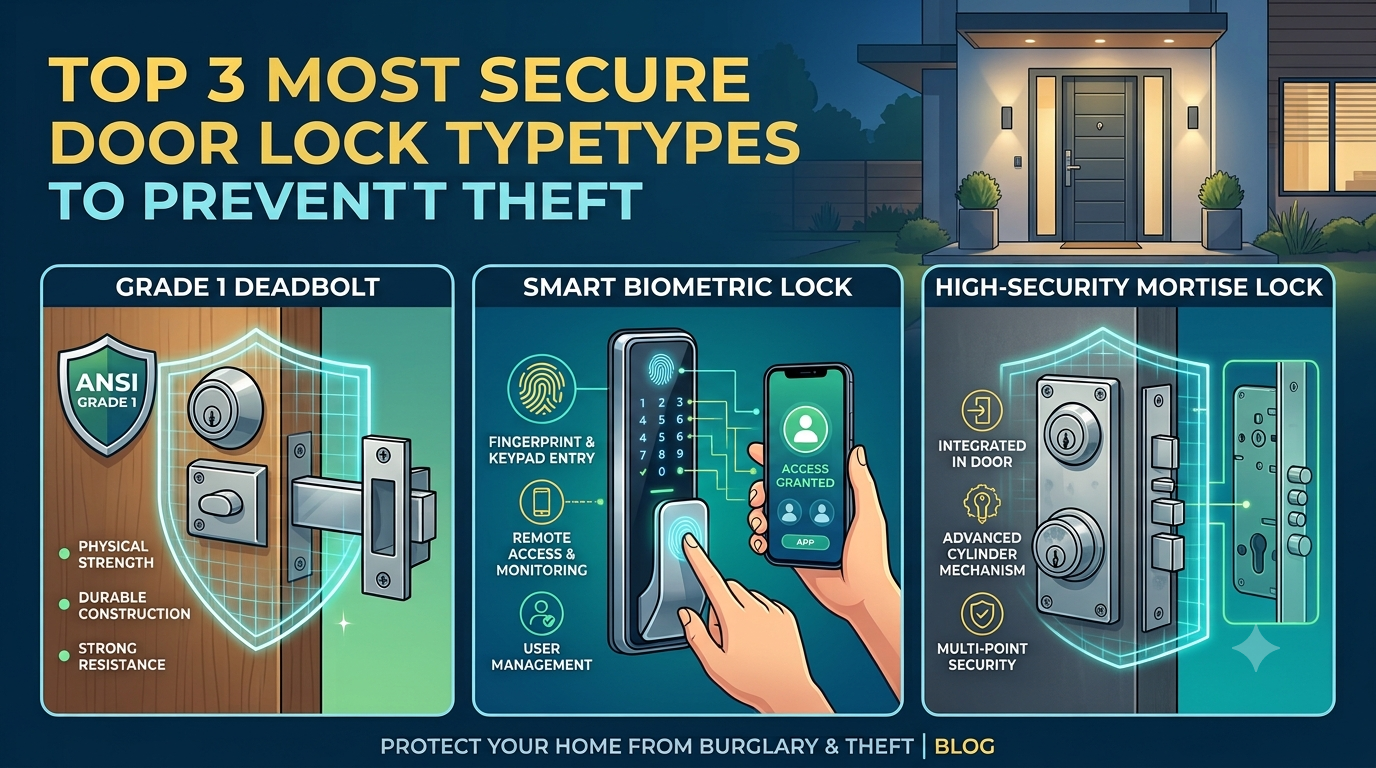
1. Mortise Locks – The Gold Standard for Main Entry Doors
Most likely, if you walk up to a high-end apartment, villa, or commercial office, the front door is using a mortise lock. For residential entryways, mortise locks are generally regarded by locksmiths and security professionals as the most secure mechanical locking mechanism.
How it works:
Mortise locks are different from typical surface-mounted knob locks because they are set into a pocket (the mortise) cut deep into the edge of the door. Inside the door itself, the whole locking mechanism is protected by a heavy-duty steel body.
How it stops theft:
-
Embedded Steel Body: The lock is embedded in the wood or metal door, so the lock face cannot be pried or sheared off the door by attackers.
Double Locking Action: Mortise locks utilize a spring latch and a heavy-duty deadbolt in one solid steel body.
Pick & Drill Resistance: Made from hardened steel pins, high-grade mortise cylinders are pick, drill, and bump resistant.
Best for: Main entry doors, large wooden doors, and villa entrances.
2. Deadbolt Locks: Tried and True Defense Against Forced Entry
Deadbolts have been a fixture of home security for decades for a reason: they work.
A typical door knob lock uses a spring latch with a beveled edge. Sometimes a burglar can slip a thin tool between the door and the frame and pop up a spring lock. But a deadbolt doesn’t have a spring mechanism – it can only be retracted with a key or thumb-turn manually.
What to Look For:
-
Solid Steel Bolt: The deadbolt should throw at least 1 inch deep into the door frame jamb.
-
Single and Double Cylinder: Single-cylinder deadbolts use a key from the outside and a thumb-turn knob from the inside. Double-cylinder deadbolts require a key on either side, preventing a thief from smashing a glass side-panel and reaching in to unlock the door.
Best for: Back doors, side entrances, and when matched with lever handles on main entryways.
3. Modern Keyless Security: Smart Biometric Locks
Smart door locks have moved on from basic PIN pads. Today’s high-security smart locks combine physical deadbolts with high-strength encryption and biometric sensors.
Security Advantages of Smart Locks:
-
No Keys to Lose or Duplicate: Keys can be stolen, copied, or lost. Biometric fingerprint scanners and encrypted smartphone access eliminate all hazards of physical keys.
-
Real-Time Activity Alerts: Modern smart locks send alerts to your smartphone if the door is unlocked or someone attempts to mess with the keypad.
-
Auto-Lock & Fake PIN Codes: Left in a hurry and forgot to lock up? Smart locks immediately throw the deadbolt behind you. Things like anti-peep PIN tech allow you to punch random numbers in before your actual password so that strangers can't guess your code.
Ideal for: New builds, rental properties, private workplaces, and busy families.
Short Comparison: Which Lock is Better?
| Lock Type | Security Rating | Best For | Key Advantage |
| Mortise Lock | ⭐⭐⭐⭐⭐ | Main Entrance Doors | Built into door edge; highest force resistance |
| Deadbolt Lock | ⭐⭐⭐⭐☆ | Side & Exterior Doors | 1-inch solid steel bolt resists prying |
| Smart Lock | ⭐⭐⭐⭐⭐ | Smart Homes & Offices | Keyless convenience, activity logs, auto-locking |
2 Expert Tips for Better Door Security
A high-quality lock is a must, but two little installation elements make a huge impact in real-world security:
-
Strengthen the strike plate: The lock bolt sits on a metal plate that is screwed into the door frame. Standard door kits include short 3/4-inch screws that only grip the thin decorative trim. Replace those short screws with 3-inch hardened steel screws that go deep into the solid wall studs behind the frame.
-
Inspect the Door Core: Installing a Grade-1 mortise lock on a hollow-core door creates a false sense of security. Make sure that your external doors are solid wood, solid metal, or reinforced fiberglass.
Frequently Asked Questions
What is the most secure sort of lock for a front door?
The best overall mechanical security is offered by Heavy Duty Mortise Locks made from stainless steel or brass, since the body of the lock is entrenched within the door itself and prying is practically impossible.
Are smart locks safer than regular locks?
Yes. Quality smart locks are made with the same heavy-duty deadbolt mechanisms as traditional locks, but with the added benefits of encrypted digital access, activity tracking, and auto-locking capabilities.
How do you pick a mortise lock?
High-grade mortise lock cylinders employ hardened anti-pick and anti-drill pins. This makes it very difficult and time-consuming for an intruder to pick discreetly.
Conclusion
One of the best and most cost-effective ways to safeguard your family and secure your home is to upgrade your door hardware. Whether you’re after the old-fashioned strength of a brass mortise lock or the contemporary convenience of a biometric smart lock, great hardware offers real peace of mind.
Looking to enhance your home security? Browse the complete line of high-security mortise locks, deadbolts, and smart door hardware from KBS Locks.